@LeadingLearner
LeadingLearner
#Vis2040: The Inverted Doughnut Curriculum
How will we use the next twenty five years to develop one of the highest performing school systems in the World? There is possibly much we can learn from the analogy of the inverted doughnut (Handy, 1991). This can be applied to the curriculum as well as the role of government in education and our own roles within schools. It is hopeless to ever try to fully describe and then dictate the whole, there is always a need to leave space to allow professional judgement and distinctiveness to enter into our systems. Continue reading
#Vis2040 – Our Top 3 Priorities: Teacher Quality, Quality, Quality
The problem in education is, too often, the current school system doesn’t actually add up to the sum of the parts, that is, the quality of the individual teachers in it are actually better than the system overall. The education system is currently nowhere near producing a synergistic professional capacity greater than the people working in it. Too many teachers are still not able to perform at the optimum level of which they are capable. Over the years politicians and school leaders have introduced a series of piecemeal changes that don’t link together into a coherent whole. What is required is whole system change in a coherent, timely and appropriately paced manner. The time scale for this is decades not years hence the need to start now. Continue reading
#Vis2040: Island or Archipelago Education?
This is the first anniversary of my application to join the SSAT’s Vision 2040 Group. The first year has been an interesting and challenging one. All credit to Tom Sherrington (@headguruteacher), who leads the group, for keeping the wheels on the project along with the core team at the SSAT. The problem we’ve had with Vision 2040, from the beginning, is that it hasn’t really managed to differentiate it from what would effectively be Vision 2020 in terms of its thinking and proposals. Continue reading
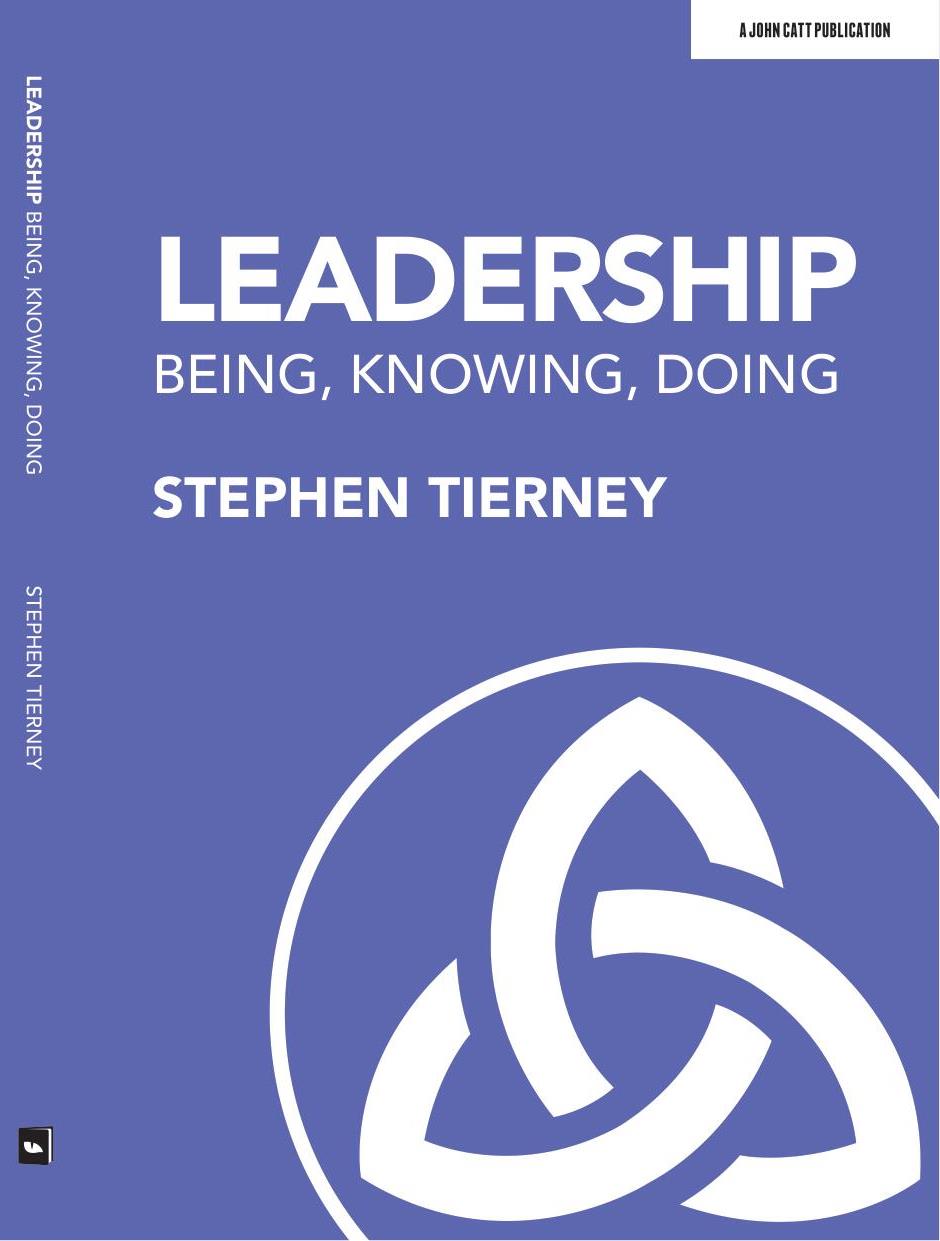
Leadership: Being, Knowing, Doing (New Book)

Liminal Leadership

COPYRIGHT LICENCE

@LeadingLearner by Stephen Tierney is licensed under a Creative Commons Attribution-NonCommercial-NoDerivatives 4.0 International License.
Based on a work at www.leadinglearner.me.

