@LeadingLearner
Leadership
A Silver Lining to the PRP Cloud?
The final day of Summer Term, the students have been waved on their happy way for the summer holidays, staff leaving speeches, with a few tears shed, have been completed and there is now a few cleaners, the site supervisors and myself left in the building. Time to write a Pay Policy me thinks.
Over recent weeks I have been meeting with staff, from both St. Mary’s Catholic College & Christ the King Catholic Primary School, to try and shape our new Pay Policy. We are part of a hard federation and this was my first real challenge as an Executive Headteacher to bring together a primary and secondary perspective into one document. I’m gratefully particularly to John Tomsett whose blogs on Performance Related Pay were particularly useful and who was generous in sharing the policies and resources developed within his school. I used the Daniel Pink video, from one of his blogs, as the start of the process and it took any potential conflict out of the process – we were all on the same page, but had a job to do.
Very quickly we agreed that there was little point in changing things, this year, that we were not required too. This was felt to be a sensible way forward as we could then spend more time thinking about the implications. So pay portability, retaining M1-6 and ignoring the new TLR3 and Lead Practitioner Role, for now, were the first decisions made.
On big pieces of paper tablecloth I drew a quick mind map with three questions for groups of staff to consider:
- What do we value?
- How will we measure these?
- How will we differentiate these?
This led to really rich and fruitful discussions, an extra meeting, and over a period of about two hours a general consensus about the importance of:
- Standards and children making progress;
- Good quality teaching;
- Professional development for teachers;
- Being true to our ethos including the development of the whole child and
- Differing expectations for teachers at the start of their careers, once they had gained three or four years’ experience and again once they had moved onto the upper pay range.
Common sense abounded and some interesting perspectives from staff who had spent time in industry or commerce about the expectation of an annual pay increase irrespective of performance were openly expressed. The discussions, which I just sat around and listened to, gave me a clear framework of staff’s thinking. I showed the groups some documents I had been given which broke the Teachers’ Standards down into their sub-clauses and then gave the expectation at five or six different stages of experience and ran to about six sides. I hated them but wanted a perspective from others – their view was “liked the clarity” but they were concerned the process would end up as a simplistic tick box approach.
Here is my first attempt, subject still to consultation with staff at both schools, to give some clarity but avoid a total tick box approach:

The full Pay Policy based on Blackpool’s Model Policy is here.
Instead of a table stretching over six sides it sits on just over half a page and hopefully reflects the discussions with staff. The key is whether it has sufficient clarity. Sometimes less can be more as people can actually grasp the whole. Also, in reality, there will always be an element of judgement and hopefully wisdom in decision making and there needs to be space for this.
The part that potentially is the “silver lining” in this PRP cloud is the expectation that teachers will increasingly be expected to share their good, best and next practice with others and take an increasing responsibility for the outcomes beyond their own classroom. “Opening the Door on Our Craft Knowledge” by Alex Quigley (with a link to an article by John Tomsett around a discussion with an experienced and expert teacher) just emphasises the importance of building “Professional Capital” within and across our schools.

Over years good teachers increase their “decisional capital” (the ability to make discretionary judgements) in their classrooms and interactions with students, parents and colleagues. If we don’t find explicit ways to share this wisdom and develop it in colleagues then every summer those staff retiring from the profession or moving to new schools will deplete a school’s professional capital. We cannot afford for this to happen and so through our new Pay Policy we have reinforced the need to develop practice, share it and work beyond our own classrooms as we gain professional experience and expertise.
More changes to Pay Policies you feel are inevitable but as leaders we need to ensure they actually address issues that need solving and are congruent with the values we hold. I’ve blogged before about this in “PRP: We’re in the Wrong Jungle!” as it needs to be a national not individual school response to attracting and retaining the best people in education.
Letters to Staff
Ever since I became a headteacher, back in September 2000, I have written to staff at some key points in their time at St. Mary’s. I always worry that the letters are beginning to be a bit mechanistic in nature as what I write hasn’t changed. However, this is because what I want to say hasn’t changed over the years either:
- Welcome, this is where we are heading and what is important to us.
- Well done, first years are challenging but you’ve come through.
- Thank you for the contribution you have made.
I started letter writing to staff when I worked as Head of Science at De La Salle in St. Helen’s. There were still a few De La Salle brothers working at the school when I arrived and they dedicated themselves and their lives to young people. Brother Nick wrote to me before I started including a picture and pen portrait of my new form plus an article or two on the importance of relationships. I’ve never forgotten the letter nor the importance of relationships in schools.
Welcome
Whilst at De la Salle I first came across the letter from a Boston headteacher who has been the victim of a concentration camp. It was a reflection during a staff liturgy and I found it so powerful I ended up having a bit of an emotional moment.

The main body of my letter reads:
Working with young people requires a true sense of vocation. At St. Mary’s we aim to challenge all young people to use their talents to the fullest within a caring Catholic community. The letter from the Boston Headteacher, who had experienced the horrors of a concentration camp, touched me deeply when I first read them.
Dear Teacher
I am the victim of a concentration camp.
My eyes saw what no-one should witness:
Gas chambers built by learned engineers;
Children poisoned by educated physicians;
Infants killed by trained nurses;
Women and children shot and burned by high school and college graduates.
So, I am suspicious of education.
My request is:
Help your students become more human.
Your efforts must never produce learned monsters, skilled psychopaths, educated Eichmanns. Reading, writing and arithmetic are important only if they serve to make our children more human”.
Helping young people grow up and develop fully as a human being must always be our central goal. This demands that we channel our efforts into the personal development of the young people we walk with, nurturing their faith and transforming them through the learning opportunities we provide. I will always judge our actions as a college against these demands.
The challenge to help young people grow in wisdom, the ability to make good and enriching decisions in their life for themselves and others, is a central core of Christian education. When leading one of the SSAT leadership courses I often refer to this letter from the Boston headteacher and emphasise the need to know core values and in which direction you are leading other. Education without developing a young person’s moral compass can be a dangerous vision.
Well Done
This graphic is wonderful and shows the bumpy ride a Newly Qualified Teacher can have. Whilst being referenced to an NQT it also speaks of the dynamic that more experienced staff may have when they move to a new school.

The end of any first year in a job is a good time to reflect, learning curves tend to be at their steepest when things are new. It’s important that we congratulate and celebrate with teachers and other staff a job well done. The reflection below often reconnects a teacher to why s/he came into teaching and strengthens the sense of vocation and anticipation for challenges ahead.
I wanted to write to you, at the end of your first year at St. Mary’s, to thank you for all the hard work you have done on behalf of our young people. The reflection “A Teacher” reminds us why we took up our vocation. There often seems to be a sense of tiredness at the end of a year or frustration at things that have not quite been done. Leave these thoughts behind you and think of the young people at St. Mary’s whose lives are richer for you being here.
A Teacher
I am a Teacher
I was born the first moment that a question leaped from the mouth of a child.
I am the most fortunate of all who labour.
A doctor is allowed to usher life into the world in one magic moment.
I am allowed to see that life is reborn each day with new questions, ideas and friendships.
An architect knows that if he builds with care, his structure may stand for centuries.
A teacher knows that if he builds with love and truth, what he builds will last forever.
I am a warrior, daily doing battle against peer pressure, negativity, fear, conformity, prejudice, ignorance and apathy.
But I have great allies: Intelligence, Curiosity, Parental Support, Individuality, Creativity, Faith, Love and Laughter all rush to my support.
And who do I have to thank for this wonderful life I am so fortunate to experience,
But the parents for entrusting me with their greatest contribution to eternity, their children.
And so I have a past that is rich in memories.
I have a present that is challenging, adventurous and fun because I am allowed to spend my days with the future.
“I am a teacher ….. and I thank God for it every day”
John W Schlatte
Have a great summer and a refreshing break.
Thank You
At the end of a career or when moving to a new job in another school teachers often look back at the things they haven’t done or are not perfect with a slight sense of regret or disappointment. We are funny people us teachers, accentuating the positive in the young people we serve is balanced by accentuating the deficiencies in ourselves. Someone once said to me, “Stephen, leave perfection to God, you are just called to do your best.”
I want the staff who are moving on and given good service to our students to know that their best efforts are massively appreciated and were good enough. Bringing everything to completeness and fulfilment was always beyond us and we must recognise and accept this.
I am writing on behalf of the Governors to thank you for your work at St. Mary’s Catholic College. The attached reflection “Planning in the Kingdom” reminds us of the small part we play in the in implementing the master’s plan.
PLANNING IN THE KINGDOM (A Prayer by Oscar Romero)
It helps, now and then, to step back and take the long view.
The kingdom is not only beyond our efforts, it is even beyond our vision.
We accomplish in our lifetime only a fraction of the magnificent enterprise that is God’s work.
Nothing we do is complete, which is another way of saying that the kingdom always lies beyond us.
No statement says all that could be said.
No prayer fully expresses our faith.
No confession brings perfection, no pastoral visit brings wholeness.
No program accomplishes the church’s mission.
No set of goals and objectives includes everything.
This is what we are about.
We plant the seeds that one day will grow.
We water seeds already planted. Knowing that they hold future promise.
We lay foundations that will need further development.
We provide yeast that produces effects far beyond our capabilities.
We cannot do everything, and there is a sense of liberation in realising that.
This enables us to do something and to do it very well.
It may be incomplete, but it is a beginning, a step along the way, an opportunity for the Lord’s grace to enter and do the rest.
We may never see the end results, but that is the difference between the master builder and the worker.
We are workers, not master builders, ministers, not messiahs.
We are prophets of a future not our own.
I hope the letters are well received, a number of staff thank me each year for writing to them. For some it is the first time they have received a note from their headteacher. I hope you’ve also enjoyed the reflections and pass them on to others.
Vision 2040: Learners at the Centre I
Vision 2040 is fundamentally an idea about “Power Shift” in the first half of the 21st Century:
- From the politicians, in a tug of war with the professionals, to a consensus implemented by highly trusted professionals. This is possibly the easy bit for us to accept and endorse.
- From teachers to students, where the learner takes centre stage in decision making about her/his learning both its direction and process. This is more difficult and challenging as it’s never easy to let go particularly when there are high stake accountability measures circling above you like vultures.
To see this power shift as part of an extended journey I want to build on some ideas shared by the wonderful and engaging Professor David Hargreaves, a number of years ago, who always challenges the orthodoxy of the time and seems to have a “crystal ball capacity” for seeing the future direction of travel.

“Any customer can have a car painted any colour he wants so long as it is black.”
Henry Ford in many ways epitomises the education journey of the 20th Century in England which has seen high quality education provided for all students. I think it’s fair for people to question whether it is yet consistently good enough in all schools and for all students but compared to one hundred years ago we are in a totally different place. This is the factory model of schooling. Power for decisions sits at a national, local and school level, often in that order, and students’ experiences are very similar.

Dell is an example of mass customisation. There is a glittering and dazzling array of options for colour of the machine, processor, hard drives and additional elements which allow us an element of control over the final product. The key to understanding this is realising the ultimate power over what type of customised machine we can build sits with Dell, they are the ones who give us the options from which we can choose. I’ve termed this, in schools, as macro personalisation and shown a number of ways this is realised in my blog post, Redesigning Schools: Masterchef II – Great Menus, Great Food, changes to the school day, lesson length, curriculum pathways options are all examples of personalisation but the power over which options students have sit with the school, it is not an infinite, unknown or ephemeral set of options. This is a start and I believe that my generation of leaders will build this into a highly effective educational provision but it is Vision 2020 not Vision 2040.
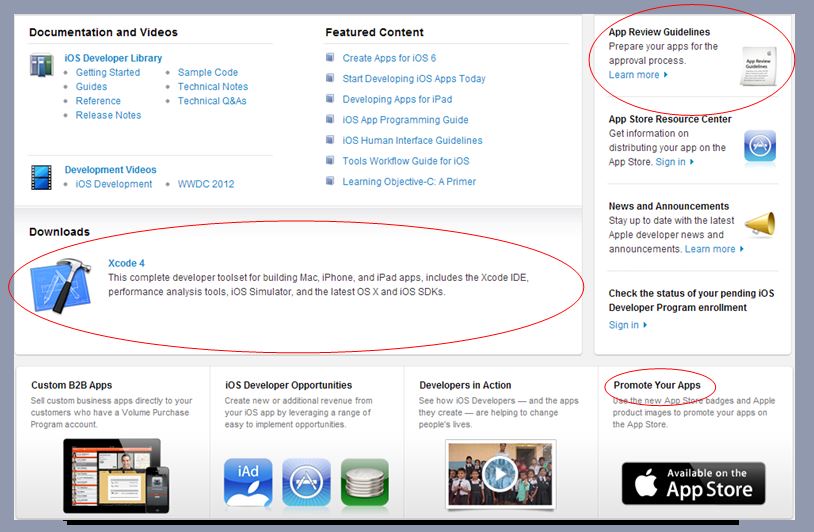
Apple has taken the next step moving the market from mass customisation to mass personalisation. On the Developer website there is information about how to prepare an app for review and also how to promote it to your potential market. Apple has also released part of their programming codes – “the complete developer tools for building … apps. Includes the Xcode IDE, performance analysis tools, iOS Simulator and the latest OS X and iOS SDKs” – which is absolutely fantastic news as we are now able to take the lead in app production, if only I had the slightest clue what this actually meant.
The shift to mass personalisation of apps is only going to happen if enough people have the knowledge, understanding, skills and attributes required of a good programmer that enables them to take and develop an idea and deliver it to the market. The power only shifts from Apple to the individual when all these things are in place. The power shift, and possibly mindset shift, required in schools and teachers sits around explicitly developing learners with the knowledge, understanding, skills and attributes required. We tend to be better at the first part rather than the latter part of the list and I fear current educational policy is doing nothing to redress this.
Mass schooling was the gift given to us by a previous generation of leaders and mass customisation must be our legacy as we ensure Vision 2020 is a reality. It is also for the current generation of leaders to provide the bridge to mass or what I term micro personalisation which will be the mission of a new generation of leaders some of whom we may have recently appointed to our schools. They will take us to micro personalisation – the learner as a decision-maker at the centre of a multi-faceted, distributed and personalised education – and this is the essence of Vision 2040. The ability for the learner to make decisions, be more self-directed and follow interests and passions will be at the heart of education by 2040 because this is what the World will need and demand. Accountability and assessment systems will need to fit around the new educational reality and qualifications like the Extended Project Qualification will take on greater and more widespread importance:
“The test of successful education is not the amount of knowledge pupils take away from schools, but their appetite to know and capacity to learn.”
Sir Richard Livingstone, Oxford University, 1942
“The skills you can learn when you’re at school will be obsolete by the time you get into the workplace – except one: the skill of making the right response to situations for which you have not been specifically prepared.”
Prof Seymour Paper, MIT, 1998
There are two follow up blog posts that develop the themes from this post further, rather aptly named, Learners at the Centre II and Learners at the Centre III.
My initial blog post on Vision 2040 is titled, Reflections of an Apprentice 2040 Visioner.
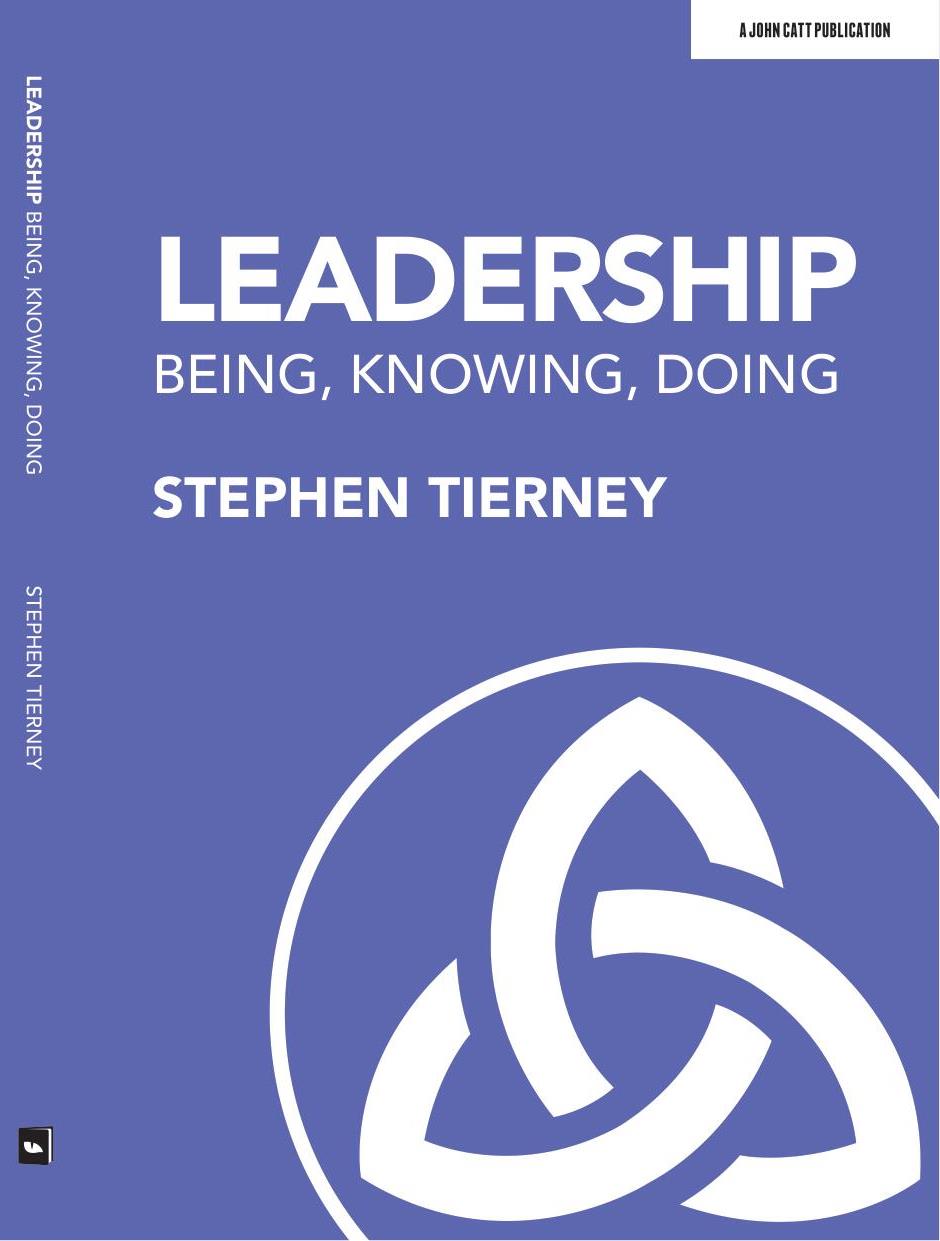
Leadership: Being, Knowing, Doing (New Book)

Liminal Leadership

COPYRIGHT LICENCE

@LeadingLearner by Stephen Tierney is licensed under a Creative Commons Attribution-NonCommercial-NoDerivatives 4.0 International License.
Based on a work at www.leadinglearner.me.

