@LeadingLearner
Curriculum
Redesigning Schools: Masterchef III – Great Food
When cooking I tend to a bit of a manic “chef”. Having chopped the onions for the curry and put them in the pan to fry I have less than ten minutes to chop the garlic, ginger, chilli, chicken pieces and sort out the spices. Needless to say it all ends up a bit of a race against time, sometimes I win and sometimes its burnt onions. My wife suggested I might want to prep all the ingredients before I start cooking – may seem obvious to you but it was a revelation to me.

However, this type of prepping won’t be enough for me to ever be successful on Masterchef. My problem is I don’t have a grounding or understanding of the basic flavour combinations, techniques and processes used by real chefs and acquired by excellent amateurs. As I’ve said before, I’m just a great recipe follower. Whilst an appetising menu provides the framework in which great food can actually be delivered (see Masterchef II) it is the food that is actually put on the plate that is all important.
The curriculum delivered day in and day out by teachers may be differ in terms of the pedagogy used – a varied diet is good for learners – but whatever the pedagogy it must be of a consistently high quality. It is because of the hugely challenging and complex decisions that are made in the planning, delivery and evaluation of lessons that we need the best people to come into teaching and they in turn deserve the best professional development we can offer.
Moving to Informed Autonomy, Distributed Accountability
During the late 1990s and into the early part of the 21st Century a process of “informed professional prescription”, largely delivered through a series of national strategies, was a key element of curriculum planning. Whilst there was some strong elements to the national strategies there were also a number of poorly researched and implemented elements. The danger was that the profession became one of “recipe followers” with key knowledge and understanding of curriculum and pedagogy being lost. We knew what to do in the classroom but we may have lost an understanding of why we were doing it. Using certain approaches and strategies without understanding how they all link to fundamental theories about learning undermines our professionalism and moves us into the role of recipe followers. The challenge we face in the coming years is to move from recipe followers to great chefs, we are entering a period of “informed autonomy” for education. This is arguably one of the defining elements of Redesigning Schools as we look to wrestle back our professionalism. Redesigning Schools, as opposed to the work undertaken by the SSAT a number of years ago on System Redesign, is likely to be more focussed on redesigning classroom experiences. This will require the hugely challenging and massively exciting task of redesigning teaching (and teachers’ thinking) and learning (and learners’ thinking). No more can schools be places where young people go to watch old people learn.
If we get this right then a number of interrelated things may happen – first the quality of education across our schools will improve further and then politicians and wider society will have confidence in what we, as a profession, are doing. This should lead to the politicians no longer, or at least less often, trying to deliver simplistic silver bullet solutions to address complex deep rooted issues. In allowing the people who really understand and know about education – those of us involved in it on a daily basis – to lead on Redesigning Schools & Classrooms there needs to be a rigorous holding to account from within – within departments, faculties, schools, federations, clusters and localities. We can’t duck this issue, its part of being professional in our approach. My experiences tell me that where middle leaders – first line accountability – challenge and correct issues early on the outcome is more likely to be: reached quickly, positive for everyone and certainly more humane then if issues are missed or ignored only for them to be picked up in an inspection. The more we hold ourselves to account the more irrelevant Ofsted become; now there’s a positive outcome. In essence I think I am describing what the high achieving countries and states around the World do.
Moving Forward: Redesigning Classrooms at St. Mary’s
“It’s not simply about what, any more, it’s about why.”
The planned and delivered curriculum “breathes” our beliefs and values even if we don’t realise it. What and how you teach says a lot about your educational values and what you value in education. Are you a transmitter of knowledge, a constructor of understanding or a developer of the learner – or maybe all three?
It is important that we make expose the underlying beliefs, principles and structures on which our curriculum and pedagogy are built. It is critical that leaders within schools can articulate and explain these underlying beliefs and put in place the structures if any policy is ever going to influence the daily lived experiences of our students.
The first thing in Redesigning Classrooms will be to redesign how we collectively see a teacher’s role, not just as a profession but as a society. Teachers are a national asset and key professionals because they possess a unique understanding about curriculum, pedagogy and learning and the practical skills required to apply them in the classroom. For this teachers must have:
- A theoretical understanding underpinning their work in the classrooms – the theories of learning that influence me the most are Constructivism (social) and Cognitivism (structured). This is not because I want to argue that they are correct or better than any other but rather because I find them useful. I think learning should be structured, social and move from concrete to conceptual. The SOLO Taxonomy really helped me apply this and has formed part of on-going CPD for staff over the past three/four years.
- Knowledge of and ability to apply “Proven Strategies” – it may be more correct to say strategies that are “more probable” to have an impact rather than “proven” but the key is they have a clear research basis. It’s important to be able to link these strategies back to the theory so as they’re applied in that classroom we understand the key components of what we are doing in terms of why we are using the approach rather than another one. Hattie’s work is again really useful in identifying approaches to look at and consider.
- The time and ability to reflect on their own experiences – reflective practitioners, teachers as researchers and developers and teachers as evaluators of own practice are terms that are all taking us in the same direction. Can we make sense of the theories and strategies within our own context and what works in the classroom for our students?
The above suggests that universities, schools and coaches/mentors should all have a role to play in the development of current teachers and the next generation. On the job training is vital to provide opportunities: to meet with and learn from other practitioners, to put theory into practice and develop the experiences needed to reflect on that practice but the theoretical framework about learning needs to be there at the core of our thinking.
Know It, Integrate It, Own It
I used the graphic below in some CPD with staff during the Autumn Term last year to explain the SOLO Taxonomy. It hopefully will work quite well in expanding on the above.

In terms of your own knowledge and understanding of the curriculum, pedagogy & learning, would you liken it to a disorganised pile of clothes? A neat stack with certain items grouped together? Or a well organised set of clothes rails with key concepts linked together each one holding the necessary and important knowledge.
After far too many words I’ve got to the core of the blog. If we are going to be a highly valued national, professional asset that has control over the curriculum, pedagogy and learning we need to have these interrelated areas and necessary knowledge organised in our minds as we walk into our classrooms. Expert teachers do and those of us that aspire to be must combine the three elements above to develop our practice.
Redesigning schools just keeps going deeper; we are now entering the inner sanctum of the classroom. This can not be just the classrooms of a few innovative, risk taking and willing colleagues but of the overwhelming majority of the profession if Redesigning Schools is really going to influence the education system.
Redesigning Schools: Masterchef II – Great Menus, Great Food
In Redesigning Schools: Masterchef I – Mustard Seeds, Yeast & Salt, I attempted to lay down the challenge facing us as we attempt to redesign schools. We have the opportunity to take back control of the core business of learning in our schools and for our students. The SSAT’s Redesigning Schools Campaign may be the banner we can gather under.
“A bit like the parable of the mustard seed I have a sense that from small beginnings this movement (Redesigning Schools) will grow and grow until it becomes one of the mainstream educational groups of this decade. The use of social media is helping it reach beyond the physical group of people and out into a virtual world, the “yeast and salt” that produces massive effect far beyond its original being.”
Continuing the Masterchef theme, to become the eventual winner a chef will need to put together some great menus and deliver great food. This blog is concerned with the menu we offer and I’ll blog again soon about “Great Food”. A menu can be fixed or a la carte. So it is with the curriculum model that we offer our students. The extent of choice and personalisation differs from school to school, depending sometimes on curriculum philosophy and sometimes on circumstances.
Great Menu – The Curriculum Model: Setting the Scene
The Curriculum Model covers all aspects of the timetable constructed including: the subjects, time available to subjects, organisation of students into learning groups (pathways & classes) and the allocation of teachers and learning spaces. The main authority and primary decision makers are the headteacher and senior leaders. This is what I call macro-personalisation, the school may consult various stakeholders but ultimately controls the offer made to students and students make their choices within the limitation of what is offered.
Following a SSAT Think tank, led by Dylan Wiliam a few years ago, I went back to College and immediately redrafted the whole Curriculum Policy to make our principles more explicit. Following suggestions by Heads of Departmnets, the Curriculum Policy was written as a handbook for staff and the first section states, the Curriculum Model will:
- Ensure that all students have access to a balanced curriculum. Students will be increasingly able to personalise their curriculum through the process of informed decision making.
- Ensure that there is a high level of rigour by providing a subject based curriculum through which students can develop the “habits of mind” – powerful ways of thinking – associated with sustained engagement with the particular disciplines and subjects.
- Ensure coherence across subjects by implementing a series of dynamic days that enable staff and students to work at a cross-curricular and interdisciplinary manner. This will help students develop a broader understanding of the application of particular subjects within the World and the links between them.
- Ensure relevance for all students by ensuring there is high quality information, advice and guidance available to students and their parents at key transition points. Choices about what to learn will increase with the maturity of the learner and students must be aware of the consequences of their choices for themselves and their future engagement in society.
- Ensure focus through the development of students as learners along side the development of knowledge, understanding and skills.
We determined a number of disciplines that students would experience at Key Stage 3 and have a choice from at Key Stage 4 with even greater choice at Key Stage 5:
Disciplines at St. Mary’s
- Communication: English Language, English Literature, Media Studies & Modern Foreign Languages
- Design, Creativity & Technology: Art & Design; Design Technology; Enterprise; Photography; Music; Drama
- Humanities: History, Geography, Politics & Religious Education
- Information & Communication Technology
- Mathematics
- Physical Education
- Sciences: Biology, Chemistry, Physics, Applied Science & Astronomy
Students in Year 9 followed an accelerated pathway – complete a number of foundation subjects by the end of Year 8 and have a set of enriched GCSE opportunities studying Photography, Psychology, Astronomy or ICT alongside GCSE in French or Spanish before completing GCSE options for Key Stage 4 mid-way through Year 9. In the standard pathway students studied a large number of core and foundation subjects, the latter for a relatively small amount of time each, which is a fairly normal pattern in many English schools.
Additional Disciplines at St. Mary’s in Key Stages 4 & 5
- Social Sciences: Business Studies and Psychology
- Applied Learning: Computer Science; Health & Social Care; Travel & Tourism; Child Development; Construction; Hairdressing & Motor Vehicle
A number of years ago we introduced Dynamic Days, when students would spend a whole day focussed on one area of study which could either be subject based, for example, they proved really useful for English Controlled Assessments or Science Coursework in Key Stage 4 or thematic days, which produced some really rich, coherent learning into the curriculum, for example, a Holocaust Day in Year 9 or a Sexual Health Day in Year 10 alongside Rewards Days and Sports Day. In addition, this will be the third year we have run a Wonderful Week for eight hundred students in Years 7-10, during the second half of the Summer Term, with a whole variety of trips abroad, day excursions and on site provision. The focus is project based learning with students exploring a single theme for a week. It is a mammoth task of organisation but one of the highlights of the year. We are in the second year of a fortnightly timetable of three one hundred minute lessons a day, except for Thursday when we shorten them to ninety minutes to allow a weekly CPD session for teaching staff.
Moving Forward
With the scene set, how are we looking to move forward over the coming years? As mentioned in Masterchef I, external forces may restrict us but will never define us and we have looked at restructuring Year 9 and tinkered with Key Stage 4 options. The former is due to internally driven change with the latter responding to the proposals put forward as part of the “Secondary School Accountability Consultation”. The three touchstones in guiding my thoughts and decisions have been:
- Will the proposed curriculum help further our vision and is it congruent with our values?
- Would the curriculum be good enough for my children?
- Will the curriculum help keep the wolves away from the door?
Year 9
In Year 9 students tended to follow a similar curriculum pattern to Years 7 & 8 though some schools have looked to start their GCSE courses in Year 9 as either a series of “short, fat GCSEs” or as part of a three year GCSE course. Key Stage 3 is only three years long as students currently complete their compulsory education at 16 and they need two years for their GCSE, it’s as simple as that. Continuing to study a wide range of subjects for relatively short amounts of time tended to produce a balanced curriculum for students but limited a really rigorous study of the subjects. Opting for GCSEs too early can be a concern as students may not have the information and maturity to make life enhancing choices, however, giving students choice can help engagement and raise achievement as we tend to excel at things we enjoy doing. Both approaches have their merits but neither extreme quite suited us.
We are towards the end of a consultation with staff and about to consult with students and parents about a “limited” choice for students in Year 9 except for those in the Integrated Pathway. All students will follow: English, Maths, Science, RE, MFL, PE & PSHE. Then students will have a choice from two disciplines, Design, Creativity & Technology and Humanities, spending 10% of curriculum time on each and an open choice again with 10% of curriculum time available:

The last block is probably the most interesting as it gives students a real opportunity to move their curriculum in the direction of the aspirations and enjoyment. They can be a double linguist, take two humanities, two creative subjects or Computer Sciences. It’s not a limitless option for students and whether a subject can run or not will depend on numbers opting. Our hope is that it will also help teachers build relationships with their students, something that is close to our heart. No longer will teachers in foundation subjects be teaching large numbers of students for a short amount of time or operating carousels in which they no sooner get to know a students name than s/he moves on. This is an example of redesigning from the inside out, we do it because we believe it is in the best interests of our students.
Key Stage 4
In Key Stage 4 all students study GCSE English, English Literature, Maths, RE and two Sciences plus general PE and PSHE. For a number of years now we have provided two pathways for students to opt from: the General Pathway is a largely GCSE pathway and the Specialist Pathway has a day a week timetabled at Blackpool & Fylde College who deliver high quality vocational courses that we do not have the facilities or expertise to offer. Students travel directly to and from B&FC, for their day, removing the hassle of transport that these partnerships sometimes pose.
The recent “Secondary School Accountability Consultation”, a clever piece of political manoeuvring but also some sound educational thinking, left us with a little puzzle to solve. Whilst students had always been able to opt for the combination of subjects in the E-Bacc we had never forced any student to do so and had essentially ignored the E-Bacc as we felt it was an educational red herring.
Our bit of manoeuvring was to move from four “open choice” option blocks to three open choices with Option Block A producing the third E-Bacc subject alongside GCSE Double Science. Mission simply accomplished – though I’m not sure Julia, our Curriculum Deputy, would agree, as she now has the task of piecing this massive jigsaw puzzle together. The “Best 8” including English, Maths, any three E-Bacc plus three others measure should be satisfies so this will hopefully keep the wolves away from the door, it would be a good enough curriculum offer for my children (what about yours?) and doesn’t compromise our curriculum principles.

The specialist pathway was a bit more interesting as we decided that beyond GCSE Double Science and with the need for a full day a week available for students at the College insisting on another academic qualification, which suited the school but not them, was a step too far. These are great young people many of whom are massively skilled with their hands and we should allow them to flourish in that environment alongside their academic core of subjects. A very large majority will go on to vocational studies post-16 at Blackpool & Fylde College. Hopefully if you need a plumber, electrician or car mechanic in the future there will be one a fully trained one available. This may damage out “Best 8” point score as they will only have two of the E-Bacc subjects for the three slots but the enhanced points in other subjects may compensate for this, either way what we have offered seems right for the students.

Providing a great menu is only part of the Masterchef Challenge and part of the education we provide. We need to provide the right options for our young people and whether you are an academy who can legitimately ignore the National Curriculum or not you can be the masters of the curriculum offered to your students. With out extended lessons, dynamic days, wonderful week, curriculum pathways and option choices we have designed a curriculum that matches the needs of our different students. It is a challenge to walk through the curriculum minefield, managing the tensions, but take control, you know you want to. Secretaries of State will come and go but your Mission for young people remains. Masterchef III focussing on great food is about to be prepped.
Redesigning the School’s Curriculum: Find Your Compass
The world of education is changing again and like many changes it is bringing us almost full circle. If you are a teacher of about fifty years or older you may just about be able to remember a time before the National Curriculum and when levels weren’t part of your life (even if like me you are struggling to remember what you had for lunch or where your car keys are). This is not quite taking us back full circle to pre-1988 as the sharp edge of accountability means you aren’t likely to tell a new Science teacher that you “can teach them (less able Year 10 group) anything you like as long as you keep them in the classroom.” The latter part of this instruction proved more difficult than I at first thought.

Much has changed in education with respect to the level of informed professional practice of teachers and the degree of accountability we all experience. The excellent SSAT Redesigning School Symposia are up and running in both Manchester and London. With Dylan Wiliam leading on the development of new curricula and assessment – the “what” we have to do – and Andy Hargreaves on Professional Capacity – the “how” to do it – we can move with both excitement and no small degree of trepidation into the next phase of education in this country. It’s time for the profession to take the lead, working with government and other interested parties, to deliver an education fit for the 21st Century and fit for our students.
Dylan’s classic one liner was “don’t implement things you don’t believe in.” I wonder what your school’s response was to the E-Bacc a number of years ago.
- Didn’t make any impact as we already required students to opt for two Sciences, a MFL & either History or Geography
- Didn’t make any impact as we thought it was a bonkers idea, didn’t fit with our curriculum philosophy and so we ignored it and carried on regardless.
- Panic – get all students opting for the E-Bacc (or at least the most able as they will get a grade C), options changed rapidly and you’ve either now seen the light of Mr. Gove’s wisdom or wondering what you’ve done and why.
We need to get our curriculum compass out and make sure we know which way we are heading particularly if, after years of being told what to do, we’ve lost sight of why we are doing certain things within the curriculum. At the symposium we were challenged to think about seven curriculum principles and which where the most important three. I failed miserably to identify just three but managed to realise it is the tension between the different principles that was going to be key in breathing life into the curriculum at St. Mary’s.
Dylan’s principles for a good curriculum were: balanced, rigorous, coherent, vertically integrated, appropriate, focused and relevant (you need to take care with these terms as they had a technical meaning that doesn’t necessarily relate directly to everyday use and meaning).
In developing our new curriculum what would teachers need to know if they were going to be effective? Here’s my starter for teachers but you will need to add your own thoughts as well:
- How their subject knowledge and concepts are vertically organised and integrated – what order do students learn these ideas and so what order should we teach them?
- What are the habits of mind, attitudes and skills students must develop if they are to be successful learners within the subject? What gets better when a student’s understanding of your subject increases?
- How does the subject relate to other subjects and society – what numeracy or Mathematical skills do students need to be successful in Science & Geography in Year 8?
- How do students learn – can we transmit knowledge and understanding or must they construct it?
What does research say about the most effective teachers and the pedagogy they use? Hattie goes for: teacher clarity (learning intentions & success criteria), feedback (but make sure the learner has to respond to it by improving his/her work), relationships and peer discussions. If you have fifteen minutes this is a great summary of Hattie’s work presented by himself on what to do and what not to do.
I had the chance to listen to Dylan a couple of year’s ago at a SSAT Think tank and immediately went back to school to redraft the College’s Curriculum Policy. After discussions with staff it was written in the style of a handbook and may give you some ideas about what to do and what to avoid. We are currently challenging ourselves to increase the pace in Key Stage 3 by building programmes of study based on learning intentions written in SOLO Taxonomy style. We want to make seven sub-levels progress in Key Stage 3 for all students and more with the most and least able.
Now that brings me to the afternoon’s work which nearly made my head explode. What are we going to do if, as it seems likely, levels disappear? If you are a teacher under fifty you won’t know life without levels. Now don’t get me wrong I realise that levels were pretty much made up by subject groups sat in rooms, have been revised, revised again, had sub-levels introduced and by now probably don’t really link to how subject knowledge and concepts are vertically organised and integrated. I know this but there is something very comfortable about the familiar. I sense the comfort blanket is about to be taken away and we are going to grow up rapidly as a profession – we are more than capable of meeting this challenge with a little more wisdom from Dylan and some assessment principles. We focussed on summative assessment. The principles to guide in building a reliable system are:
- Distributed (so that evidence collection in not undertaken entirely at the end)
- Synoptic (so that learning has to accumulate)
- Extensive (so that all important aspects are covered)
- Manageable (so that costs are proportionate to benefits)
- Trusted (so that stakeholders have faith in the outcomes)
The introduction of data and its use in schools over the last decade has taught us much: make sure you know a student’s starting point (teach them from this point), set challenging and explicit goals linked to specific knowledge, understanding and skills that s/he needs to attain and check how they are going during lessons, at the end of topics and periodically through the key stage. The information generated from assessments can be used to monitor progress and intervene when necessary. This is great learning for us as professionals.
As we hopefully take the lead in matters of curriculum, pedagogy and assessment there is a need to make sure we build the professional capacity within our school, localities and nationally. That was day two of the Redesigning Schools symposia with Andy Hargreaves, PC = f [HC, SC, DC], the “how” we can do it.
This is my second ever blog, the first attempt to write one I have managed to lose in the ether. If you find it please send it back to me. I’ll gather my thoughts on the building of professional capital, courtesy of Andy Hargreaves and blog again.
Thanks to Dylan Wiliam for a fantastic day and to Sue Williamson who is leading the SSAT onto fertile and crucially important ground. Interested in Redesigning Schools? Get involved.
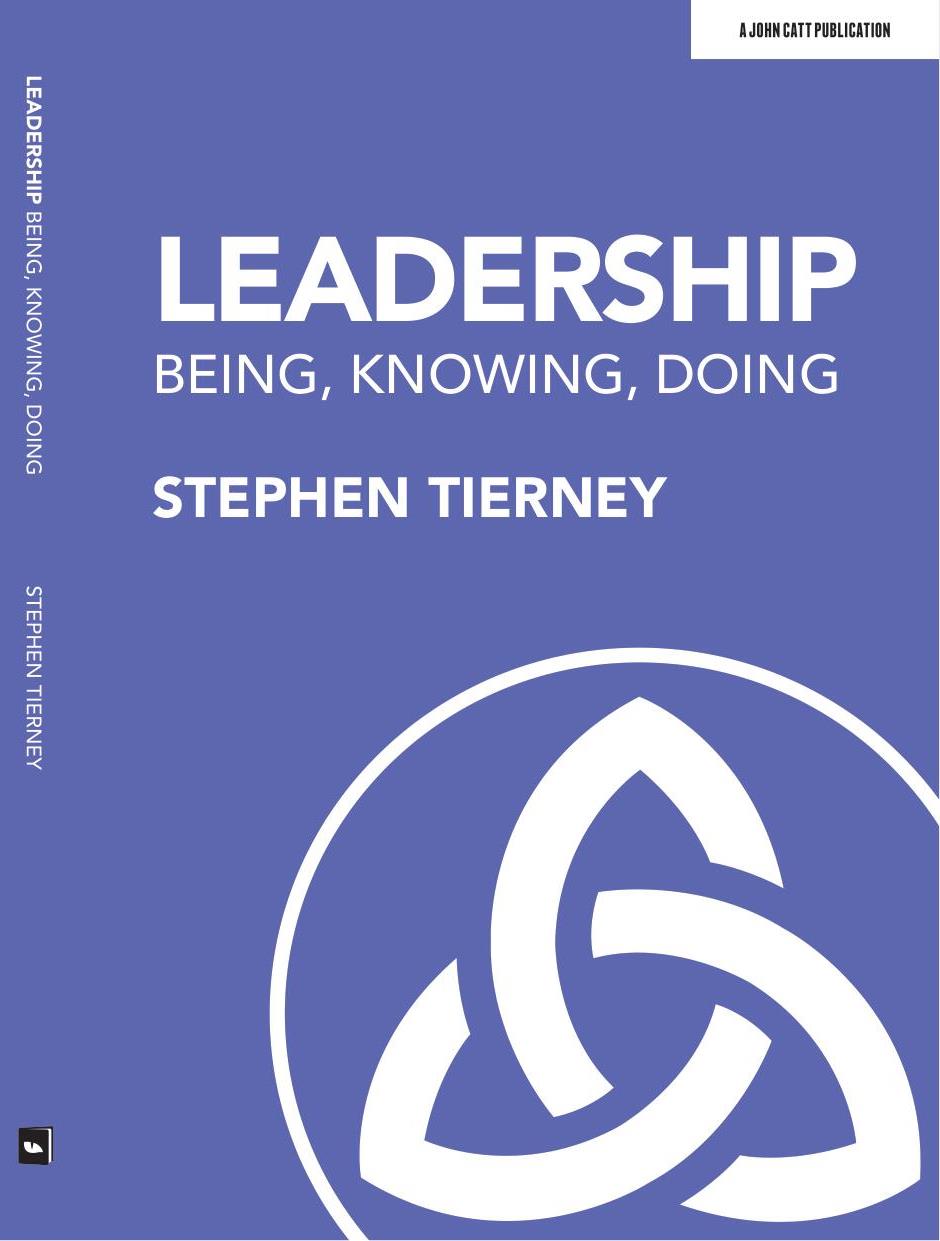
Leadership: Being, Knowing, Doing (New Book)

Liminal Leadership

COPYRIGHT LICENCE

@LeadingLearner by Stephen Tierney is licensed under a Creative Commons Attribution-NonCommercial-NoDerivatives 4.0 International License.
Based on a work at www.leadinglearner.me.
 @LeadingLearner
