@LeadingLearner
Education
Vision 2040: Learners at the Centre III
It is a big enough challenge helping our students to become independent learners but this is no longer enough. We need to take them further so they can develop into interdependent learners. In our model of the 4Cs learner we strive to move from Independent Confident Learners, covered in Learners at the Centre II, to Interdependent Co-operative, Connected and Creative Learners. As I’ve said before this is part reality and part vision, we still have a long way to travel before all our students are interdependent learners. However, if Vision 2040 is to be realised the interdependent learner will be at the heart of education.
In a fantastic symposium led by Professors Guy Claxton & Bill Lucas, What Kind of Teaching for What Kind of Learning?, the following draft principles were proposed:
Eight Principles of Expansive Teaching and Learning in Schools (For Discussion)
- Schools are the foundation for a lifetime of learning
- There are a set of wider life and learning skills which need to be deliberately cultivated in the context of the curriculum and beyond
- What learners believe about themselves matters and a ‘growth mindset’ is both a powerful motivator and a predictor of success
- Parents and the wider community have a significant role to play in pupil’s learning at school
- When teachers actively continue their own learning and model this in their classrooms learners achieve more
- Learning works well when it builds on pupils’ prior experiences, is authentic, has clear and stretching goals and is undertaken in an environment full of formative feedback with many opportunities for reflection
- Learning requires opportunities to develop emotionally, socially and practically as well as intellectually, individually and with appropriate theoretical grounding and understanding
- Learning is learnable and improves when learners have a set of metacognitive strategies which they are able to use confidently in a range of contexts.
Whilst these are challenging enough for schools I believe by 2040 we will need to replace schools as the foundation of a life time of learning with learners as the foundation of a lifetime of learning. Schooling will be insufficient, we will need to create educated and interdependent learners capable of learning throughout their lifetime. Now, more than at any other time in history, learners are able to capture and share knowledge quickly and easily and develop their understanding using the internet. Teachers and peers may still remain the main source of learning in schools particularly for core subjects but there is the potential for highly personalised learning, niche community learning beyond that. Imagine a day when students of all ages have study periods to pursue their own personalised, niche projects and learning.
The three elements of the 4Cs Learner below all have “attributes” linked to them which are part of the 5Rs – Traits & Attributes of Effective Learners and so I won’t repeat this in each section. The pictures below, taken from my brain, can be seen in a more dynamic presentation at the link here.
CO-OPERATIVE LEARNER

The 4Cs Co-operative Learner is socially and emotionally literate and Kagan competent. Thanks to Peter Rubery, headteacher of The Fallibroome Academy, who I always found hugely generous in sharing ideas and practice, who introduced me to Co-operative Learning and the power of Kagan structures on a train back from London.
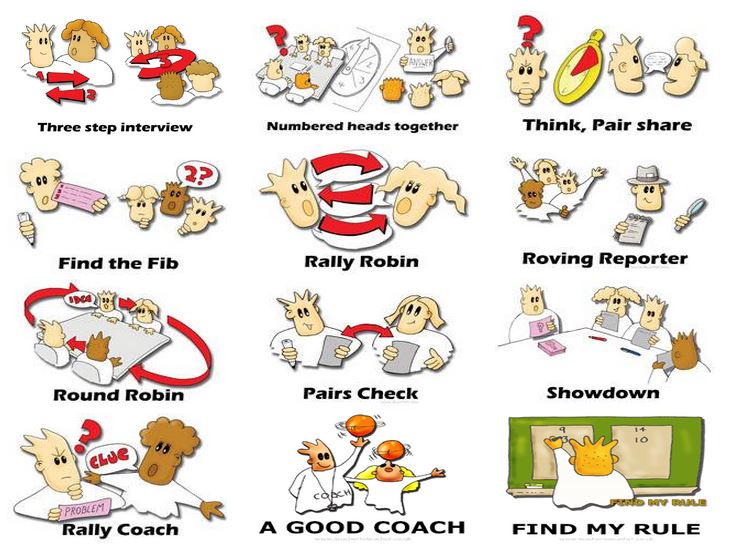
I have enjoyed using the Kagan structures – simple ways of getting pairs and groups of people working together in a structured way – with a large group of over a hundred adult learners and seen them used very effectively to transform interactions in a classroom. There is a danger that they can be overused and it is vitally important that people keep the structures pure. As ever the decision making skill of the teacher, when to use and when not, is all important. If you want to find out more information have a look at the website www.t2tuk.co.uk. The structures help students develop the skills of co-operation and learning together.
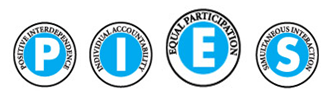
The principles of Co-operative Learning (PIES) were the first thing we were taught as a staff – when you set students a learning activity, to work on in pairs or as a group, is the activity fit for purpose and structured appropriately? Would they say to their partner or group members,
“I cannot complete this task and learn from it without your help and support?”
“I need to keep focussed because I may be the one explaining our thinking or outcome”
“It’s great that no one can monopolise the task or discussion (hogs) and no-one can sit back and do nothing (logs), we are all taking part.”
“We can all engage at the same time, no sitting waiting around or day dreaming here.”
This peer to peer learning as one aspect of practice in developing the interdependent learners we will need as part of the process and outcome of education in 2040.
CONNECTED LEARNER
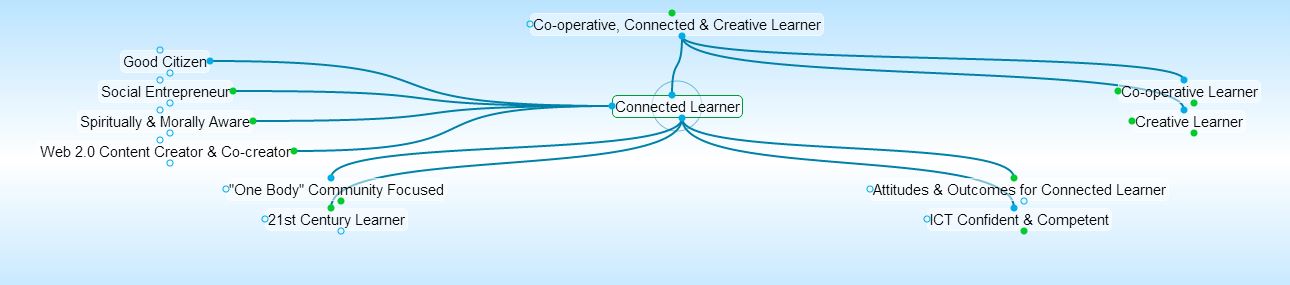
The Connected Learner obviously looks at skills required and outcomes linked to the digital world but also builds on our Catholic ethos of being “One Body” with a community focus – local, national and international.
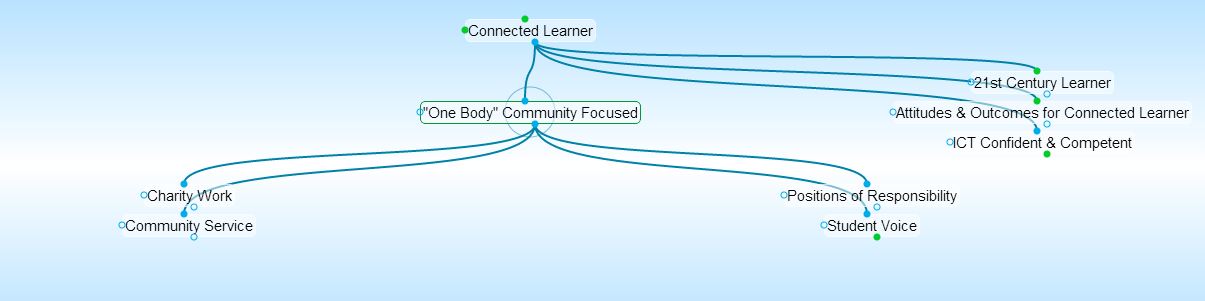
Our students engage with issues of social justice with great enthusiasm and generosity. For us community service, positive action and fundraising are matters of justice not choice. The fundraising varies from a focus on three schools in Ghana, to a variety of local charities, to individual named children & pensioners (obviously not their real names) who are bought presents at Christmas by the students and distributed by local charities or parishes. The positive action also extends to working with children from a local special school, bespoke stand alone projects, St. Vincent de Paul Society and so the list goes on. This is an important part of our student’s education in a global society and my experience tells me that are happier doing something about injustice rather than talking about it.
The second element involves the use of new technology which is increasingly a challenge for all schools. I’m not going to revisit it here as @JohnTomsett covered the issues in his comprehensive blog “This much I (don’t) know about the future of ICT in Schools”.
What we do know is that the megatrends in technology have been towards personal ownership of devices, mobile usage and cloud technology. However, in schools we still build rooms containing desktop machines with huge storage on site which is sometimes inaccessible from outside. The odd trolley of laptops is thrown in but without any ownership too often become damaged. John’s concern about spending £170,000 per annum on ICT is real. Maybe this was possible in the good times but in times of financial constraint schools are not funded to provide mobile devices to all students.
Our own approach, fortunately supported by BSF, has been to flood the school with wireless capability and look to each student having their own laptop which is funded by parents as part of a voluntary scheme – parents are invited to be part of the laptop scheme with a suggestion of £12 per month donation and a reduction to £6 for subsequent children from the same family or those entitled to Pupil Premium. Individual cases are always looked at but the overwhelming majority of parents see it as great value for money. About 70% of students are involved in the scheme and the income is approaching £100,000 per annum, with nearly all year groups involved. This money is used to buy a laptop for students on entry to the College with a new device in the middle of Y9 and on entry to Sixth Form. The scheme is now self-financing and sustainable. The biggest issue or frustration for parents is whether we are using them enough in class and when we don’t use them enough students then don’t bother or forget to bring them in. I’m sure within a number of years we will have moved to a Bring Your Own Device (BYOD) style of scheme. The greatest digital divide over the next decade will be the “can do” and “cannot do” rather than the “have and have nots”.
Getting teachers to find ways to incorporate ICT in lessons so that it actively enhances learning is a real challenge and long journey, we are still journeying and just keep taking the next step. However, the years to come are bound to see us buy devices for students that are currently not yet on the market, see a greater integration of technology and learning and provide more opportunities to genuinely use technology to enhance and personalise a student’s learning rather than simply use technology more often with no real purpose. Students will need to be increasingly skilled and understand what they are doing in the digital world, their use and misuse of social media sometimes shows a worrying naivety and lack of real understanding.
CREATIVE LEARNER

There are a number of elements of the Creative Learner. I’ve blogged about the Project Based Element before stressing the need for real rigour and not PBL Lite. Project based learning provides students with a controlled environment in which to develop the skills required for enquiry based, self-directed learning that is at the heart of a more personalised education.
This links to the development of divergent thinkers. As a nation we have some of the most creative people on Earth (I know I’m biased) with the opening and closing ceremonies of the 2012 Olympics being a celebration of this creativity. The education system must play a part in developing this creativity. We need to think about the development of this divergent thinker in all our subjects not just pretend it belongs to a limited number of “Creative” subjects. The opportunity for students to use their knowledge and understanding to explore open ended tasks through projects like STEM Club all builds the problem solving skills used at work and in life in general.
SUMMARY
The elements of the 4Cs Learner – Confident, Co-operative, Connected and Creative – overlap, integrate and are mutually supportive. If you want to see an example of the connected, co-operative learner have a look at this great blog from @ICTEvangelist on Student Digital Leaders. I find it inspiring as it gives a coherent structure for the power of peer to peer learning (with a bit of support thrown in for teachers) in the digital world. Key to development of the 4Cs Learner is the time spent on metacognition and exploring, identifying and honing the skills used in learning and as a learner. These skills are powerful and transferable. Just imagine a class room where all students possessed them.
The 4Cs Learner is not the model but a model of a learner developed specifically at St. Mary’s but pulling on good practice we have seen elsewhere. There are other great models available. The most important thing is for teachers and schools to have a model of a learner that they explicitly develop over time.
Chris McShane, Headteacher of Winton Community Academy recently included in a blog post from the Headteachers’ Roundtable the idea that:
“Subject knowledge was the DNA of teaching and learning in the 20th century we need to rewrite the DNA for the 21st.”

I would like to build on this idea:
- Subject knowledge and the understanding that is derived from it will be a fundamental part of the DNA of teaching and learning in 2040
- The other strand of the DNA double helix represents the subject procedural skills and habits of mind we utilise in our teaching and students’ learning.
- The complimentary base pairings that hold the helix together represent the learner (in our case the 4Cs Learner) who must be explicitly developed by all teachers.
It is the whole structure, knowledge, understanding, subject skills and learner skills that are all key, no-one part of the structure is greater than the whole, despite various arguments put forward by some in education. Our DNA gives us life and allows us to produce new life. It is at the heart of our uniqueness. The educational DNA of this century, running through our schools, must put the learner, who’s explicitly developed, at the centre of their own education as part of their learning and to help them create new more personalised learning themselves.
If you want to understand the thinking behind my direction of travel in this post, please read Learners at the Centre I
Vision 2040: Learners at the Centre II
In the first part of what now looks like it will be a trilogy, Vision 2040: Learners at the Centre I, I put forward the idea that as we move towards 2040 we will see various power shifts in education including from teachers to students, where the learner takes centre stage in decision making about her/his learning both its direction and process.
Take a moment to think about the best learners you have ever taught, not necessarily the most able, articulate or brightest but the learner who impressed you most with her/his approach to your lessons … now imagine a whole class full of these learners sat in front of you! This would fundamentally change what happens in schools, for the better, but we have a responsibility to explicitly develop these learners. Tom Sherrington (Chair of the SSAT Vision 2040 Redesigning Schools Group and tweeting as @headguruteacher) effectively pre-empted the first part of this post with his comment on my previous post:

“The blend of these ideas … rather than pitting them against each other.”
As I think about schools and learners of the future then three aspects of learning have to be put into place. We need to see these as interrelated, summative and synergistic as we work with all three elements together:
- A cognitively and vocationally challenging curriculum
- The habits of mind and procedural skills that enable students to be
- Explicit development of students as learners – independent then interdependent.
We need students to have a cognitively and vocationally challenging curriculum. They need to develop sufficient knowledge on which to build a conceptual framework of an area of study, a real deep understanding, and this conceptual framework is then the basis on which further knowledge and concepts can be built. I’ve blogged before about the SOLO Taxonomy (Redesigning Classrooms: Using SOLO to Increase Challenge which has links to some other posts that might be of interest). Lots of teachers at St. Mary’s have found the SOLO Taxonomy really useful to build challenge into their class room practice on in a sequentially and organised way.
We also need to build the habits of mind and skills that will allow students to be scientist, historians, linguists, technologists, mathematicians etc rather than simply doing our subject. An interesting experiment pitted a group of history professors against some American history undergraduates. The first part of the experiment tested knowledge and understanding focussed on a period of history studied by the undergraduates but not the specialist area of the professors. The undergraduates outperformed the professors. However when both groups were given materials about a period of history neither were familiar with the professors way outperformed the undergraduates. The undergraduates had learnt about a period of history but the professors knew how to be historians – critically analyse sources, make hypothesise, draw out different inferences and come to a conclusion. We need our students to be not simply to know.
Let me just turn this on its head for a moment as these procedural skills need to be placed in a rich and challenging curriculum not a vacuum. About twenty five years ago, as a young Science teacher, I was asked to speak at a Science Conference about some work I was doing on Process Science – explicitly teaching scientific procedural skills. There were a number of presenters and one was talking about a thirty minute observation homework where students had to observe the bubbles for half and hour and write about what happens to bubbles made with washing up liquid in water. I don’t know about you but this would bore me stupid: process without a challenging context is superficial and a wasted opportunity.
Both these areas, whilst always accepting that we could improve further, are familiar to schools. The real gap in many schools and in our curriculum thinking and planning is around the explicit development of a learner.

We need learners who initially becomes independent but whose ultimate aim is for interdependence. This is part of a natural process akin to the move from childhood dependency, to teenage independence and then an adult interdependency. As we set our sights on 2040 we need to put the learner at the centre, a decision making highly able learner, who can personalise their curriculum both within any mandated core and beyond it. Learning in 2040 will be more multi-faceted, distributed and personalised than it currently is or was in the 20th Century and this will be massively accelerated by technology.
The 4Cs Learner
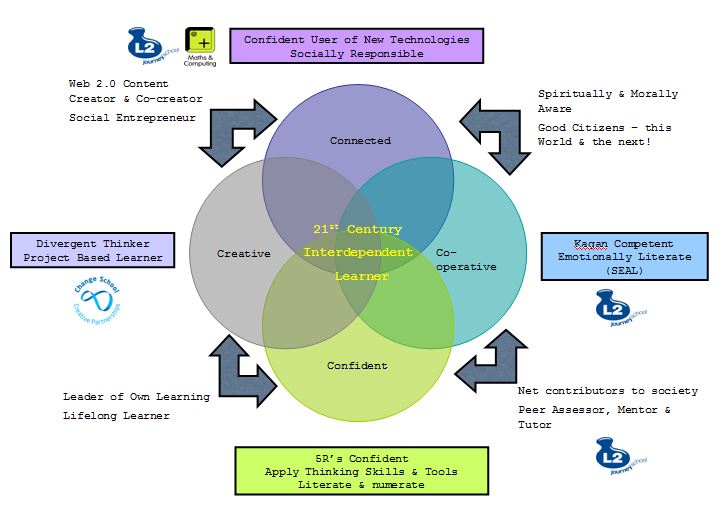
The 4Cs Learner was first produced in Summer 2008 in response to a request from a member of staff to put a stream of different ideas and thoughts I was presenting and discussing with teachers, about the type of learner we should be aiming to develop, onto one side of A4. Staff were interested in the various ideas but were really confused by my usual “box of frogs” thinking and needed a coherent picture to engage them. However, the root of the 4Cs Learner goes much further back to fundamental beliefs about what education is about. Part of this is how we build academic success for our students. In my first presentation to staff at St. Mary’s, on Day 1 as a newly appointed headteacher in September 2000, I said that we would build our students’ academic success on three things: literate, numerate and ICT capable learners; learners with good interpersonal and social skills and learners with a wide range of thinking skills. This pretty much still sums up what I believe now about developing learners. My thinking was greatly influenced by Alistair Smith (@alatalite) who I first heard talk about developing learners and learning in the late 1990s in Leeds and the Cognitive Acceleration in Science (CASE) Programme, which is one of the few things I would make compulsory in schools if I was Secretary of State for Education for a day.
The link below takes you to a different view of the 4Cs learner which is a bit more dynamic and has some resources attached – it’s like looking into my mind, so carries a big health warning.

http://webbrain.com/brainpage/brain/960FBA40-91C4-9B2C-EB54-AB3C0A0A8D77#-2
You cannot create the power shift in decision making required to personalise learning, at a micro or student level, without having highly confident, co-operative, connected and creative learners. I want to focus on the Confident Learner, as this is the first stage of the journey, that takes the learner from dependency on a teacher to independence as a learner.

The Confident Learner consists of a number of key elements, ensuring a learner has: the literacy and numeracy skills required to access an increasingly challenging curriculum; the attributes of a successful learner that we have based on Alistair Smith’s 5Rs and combined these with Social & Emotional Aspects of Learning (SEAL) and the development of thinking skills and use of thinking tools.
In some ways I feel that we were doing better in realising the vision of a learner back in 2008. A huge capital building programme has knocked the school sideways in recent years but we are approaching the end of that and I intend to help staff reconnect the 4Cs Learner with everyday practice. However, here are a few things already going on to help us realise the Confident Learner:
Literacy & Numeracy
The development of literacy and numeracy has had its profile raised by the most recent Ofsted framework but it has always been there in most teachers’ minds. Last year our Head of Learning Support, Paul Gillespie, started a pilot with paired reading between Year 11 students and students in Years 7 & 8 who had low reading scores, on standardised tests. This was a real joy to observe, as you walked down the “street” you would see younger students being mentored in their reading by older ones during morning registration. He followed this up with spelling tests for Years 7 & 8 also in morning registration. Paul produced a list of twenty spellings for the week which were handed out to students in Year 7 & 8 forms by Year 11 students who would then administer the test and mark them before reporting scores back to Paul – a highly efficient system. This year we want to move this on and look at the use of MangaHigh and Khan Academy to help develop students’ numeracy skills and mathematical understanding.
This September we will be implementing the National Mathematics Partnership’s “Passport Maths” programme which aims to move students who enter secondary school at level 3 or a weak level 4 to a secure level 4 in the first term of Year 7. We have also just appointed a new Literacy Co-ordinator, in an agreement with a number of our associated primary schools, who will work primary co-ordinators to develop a coherent English and literacy curriculum across the later years of primary school and the early ones of the secondary. In addition she will develop or find a literacy programme, similar to the Maths one mentioned above, to move students with weaker literacy skills to a “good level 4” as soon as possible in Year 7.
These developments all have real promise and collectively could be powerful agents in helping develop our students as Confident learners. Our challenge is to pull this together into a coherent and consistent programme of literacy and numeracy development for all students in their early secondary years. We have started but there is a long way to go.
Attributes (Traits) of a Successful Learner

These are a set of soft skills that I hope we will develop in all learners – we want our learners to be responsible, resourceful, reasoning, reflective and resilient.
To help clarify, there was a great little “twitter dialogue” about resilience as part of #sltchat. One line of thinking developed from “we need students to be resilient and able to keep learning particularly when they are struggling or find the work difficult” with the other developing from “we need cognitively demanding work first for students to develop the attribute of resilience in their learning”. Within a few tweets love and fraternity broke out as it is clear these are mutually inclusive perspectives. Resilience cannot be developed in a vacuum lacking rigour and challenge but if we want to increase the level of rigour and challenge then we need students to be resilient in their learning.
These are expected to be present in teachers’ planning, lesson objectives, success criteria when marking key pieces of work and we report on these to parents. I say “expected” as we still have someway to go but this is about fundamental beliefs as a teacher and converting this into daily class room reality – do you believe it is part of a teacher’s role to explicitly develop students as learners? If “yes” then all that needs sorting out is the what and how. If “no” then who will develop the learning skills of those students who don’t possess them, often some of our most vulnerable young people?
Thinking Skills & Thinking Tools
To help develop young people’s thinking skills we use a range of different courses across Key Stage 3 particularly in Year 7. Thinking Skills in History and Thinking Skills in Geography plus Cognitive Acceleration in Science and Maths. A Learning to Learn Programme, co-developed by Alistair Smith at ALITE, is delivered by a number of departments: the RE Department teach “I Learner”, the Science Department “Team Learner” and the ICT & Computing Department “21st Century Learner”. Most recently we’ve had a dynamic day with different year groups trialling the “I Thinker” challenges.
The thinking tools sound exotic but will be familiar to many teachers as graphic organisers which help students order and organise their thinking and ideas. There are many really useful examples of tools that can be found on the internet – my current favourite is the “Lotus Diagram”.
Our challenge as a school is to develop the 4Cs Learner and the associated elements consistently and to a very high quality. This is very much a work in progress, part vision and part reality, but it is an essential element of Vision 2040 if power is going to shift.
My first blog post on Vision 2040 was “Reflections of an Apprentice 2040 Visioner” but there are an increasing number of great blog posts coming in from Kev Bartle Part I and Part II and all the Vision 2040 Group – it would be great if you got involved.
Vision 2040: Learners at the Centre I
Vision 2040 is fundamentally an idea about “Power Shift” in the first half of the 21st Century:
- From the politicians, in a tug of war with the professionals, to a consensus implemented by highly trusted professionals. This is possibly the easy bit for us to accept and endorse.
- From teachers to students, where the learner takes centre stage in decision making about her/his learning both its direction and process. This is more difficult and challenging as it’s never easy to let go particularly when there are high stake accountability measures circling above you like vultures.
To see this power shift as part of an extended journey I want to build on some ideas shared by the wonderful and engaging Professor David Hargreaves, a number of years ago, who always challenges the orthodoxy of the time and seems to have a “crystal ball capacity” for seeing the future direction of travel.

“Any customer can have a car painted any colour he wants so long as it is black.”
Henry Ford in many ways epitomises the education journey of the 20th Century in England which has seen high quality education provided for all students. I think it’s fair for people to question whether it is yet consistently good enough in all schools and for all students but compared to one hundred years ago we are in a totally different place. This is the factory model of schooling. Power for decisions sits at a national, local and school level, often in that order, and students’ experiences are very similar.

Dell is an example of mass customisation. There is a glittering and dazzling array of options for colour of the machine, processor, hard drives and additional elements which allow us an element of control over the final product. The key to understanding this is realising the ultimate power over what type of customised machine we can build sits with Dell, they are the ones who give us the options from which we can choose. I’ve termed this, in schools, as macro personalisation and shown a number of ways this is realised in my blog post, Redesigning Schools: Masterchef II – Great Menus, Great Food, changes to the school day, lesson length, curriculum pathways options are all examples of personalisation but the power over which options students have sit with the school, it is not an infinite, unknown or ephemeral set of options. This is a start and I believe that my generation of leaders will build this into a highly effective educational provision but it is Vision 2020 not Vision 2040.
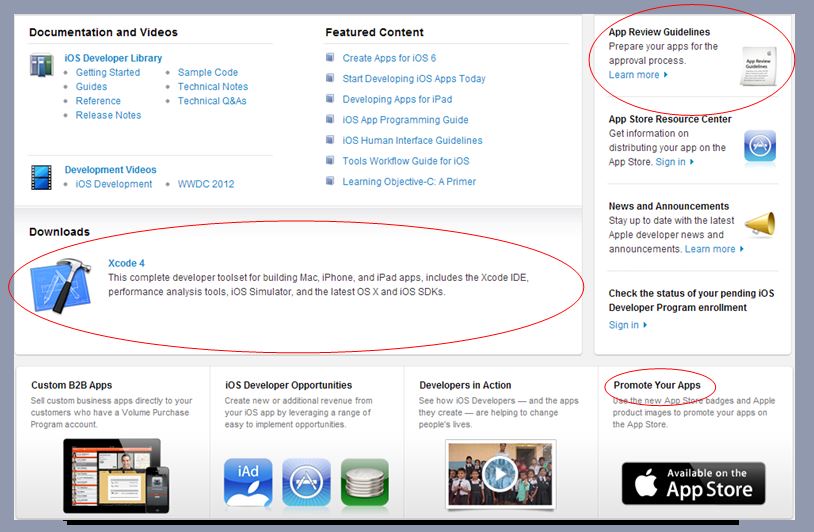
Apple has taken the next step moving the market from mass customisation to mass personalisation. On the Developer website there is information about how to prepare an app for review and also how to promote it to your potential market. Apple has also released part of their programming codes – “the complete developer tools for building … apps. Includes the Xcode IDE, performance analysis tools, iOS Simulator and the latest OS X and iOS SDKs” – which is absolutely fantastic news as we are now able to take the lead in app production, if only I had the slightest clue what this actually meant.
The shift to mass personalisation of apps is only going to happen if enough people have the knowledge, understanding, skills and attributes required of a good programmer that enables them to take and develop an idea and deliver it to the market. The power only shifts from Apple to the individual when all these things are in place. The power shift, and possibly mindset shift, required in schools and teachers sits around explicitly developing learners with the knowledge, understanding, skills and attributes required. We tend to be better at the first part rather than the latter part of the list and I fear current educational policy is doing nothing to redress this.
Mass schooling was the gift given to us by a previous generation of leaders and mass customisation must be our legacy as we ensure Vision 2020 is a reality. It is also for the current generation of leaders to provide the bridge to mass or what I term micro personalisation which will be the mission of a new generation of leaders some of whom we may have recently appointed to our schools. They will take us to micro personalisation – the learner as a decision-maker at the centre of a multi-faceted, distributed and personalised education – and this is the essence of Vision 2040. The ability for the learner to make decisions, be more self-directed and follow interests and passions will be at the heart of education by 2040 because this is what the World will need and demand. Accountability and assessment systems will need to fit around the new educational reality and qualifications like the Extended Project Qualification will take on greater and more widespread importance:
“The test of successful education is not the amount of knowledge pupils take away from schools, but their appetite to know and capacity to learn.”
Sir Richard Livingstone, Oxford University, 1942
“The skills you can learn when you’re at school will be obsolete by the time you get into the workplace – except one: the skill of making the right response to situations for which you have not been specifically prepared.”
Prof Seymour Paper, MIT, 1998
There are two follow up blog posts that develop the themes from this post further, rather aptly named, Learners at the Centre II and Learners at the Centre III.
My initial blog post on Vision 2040 is titled, Reflections of an Apprentice 2040 Visioner.
Leadership: Being, Knowing, Doing (New Book)

Liminal Leadership

COPYRIGHT LICENCE

@LeadingLearner by Stephen Tierney is licensed under a Creative Commons Attribution-NonCommercial-NoDerivatives 4.0 International License.
Based on a work at www.leadinglearner.me.
 @LeadingLearner